Download datasheet Datasheet
Product video Product video
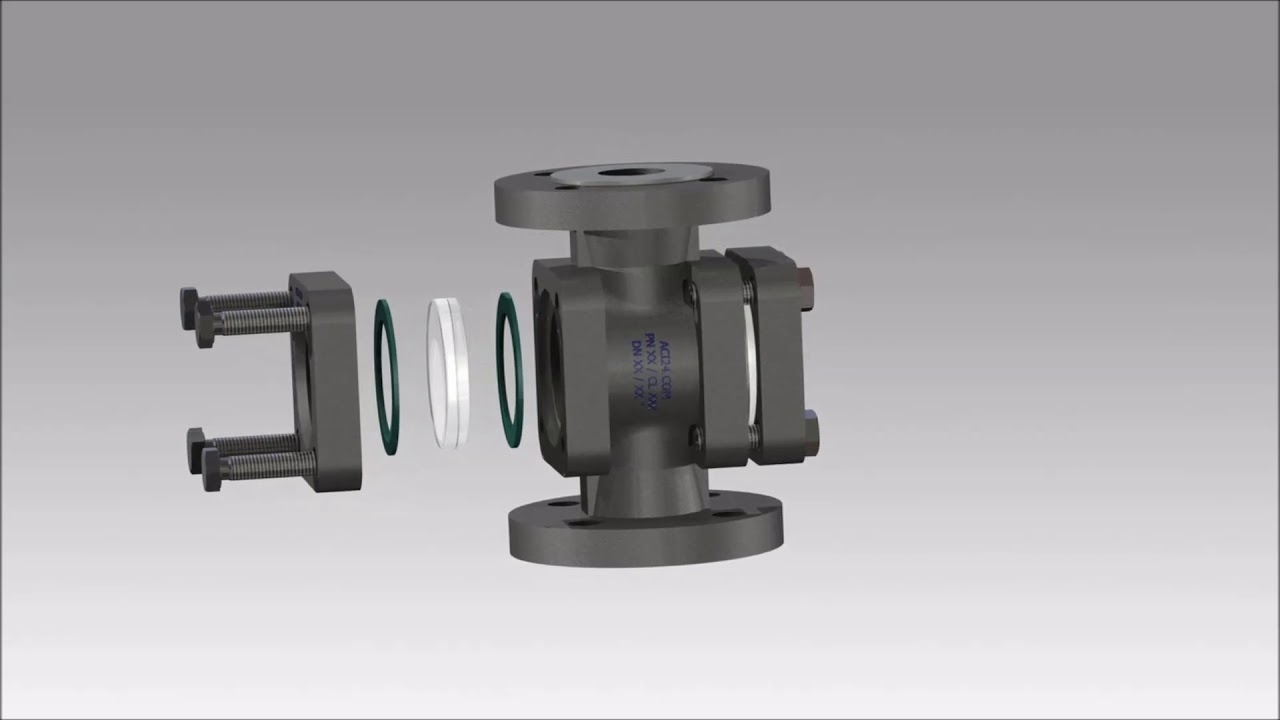
With flange connections according to DIN 1092-1
Flow sight glass PN 10 | PN 16 | PN 25 | PN 40
Non binding • Usually a response within 24 hours


DN 15 – 50 Rectangular cover flanges
DN 65 – 200 Circular cover flanges

The Flow Sight Glass Type 550 is a robust sight glass fitting based on DIN 11869 (old DIN 3237) for the visual monitoring of gaseous or liquid media in pipelines. It is suitable for the reliable visual inspection of flow and media condition in industrial processes.
The flow sight glass is designed for installation between DIN/EN flanges and is supplied as standard with flange connections according to DIN EN 1092-1.
The installation position of the Flow Sight Glass Type 550 can be freely selected and adapted to the respective installation conditions of the plant.
The design and calculations have been pre-approved by TÜV SÜD Industrie Service GmbH. This ensures maximum safety.
The Flow Sight Glass Type 550 is manufactured as standard from cast stainless steel 1.4408 and is therefore suitable for industrial applications subject to corrosion.
On request, the flow sight glass with flange connections is also available in special alloys such as Duplex or Alloy C22. This makes the fitting suitable even for particularly demanding operating conditions and corrosive media.
As standard, thermally toughened borosilicate glass according to DIN 7080 (MAXOS®) is used.
For higher thermal loads, the sight glass can additionally be equipped with a mica protection shield. For applications involving aggressive chemicals or alkalis, the sight glass can optionally be fitted with an FEP or Halar® coating.
For sealing, flat gaskets made of various materials are available, e.g. Frenzelit novaphit® MST XP, KlingerSil® C4400, Garlock Gylon® and PTFE (virgin or modified). More than 50 additional sealing materials from renowned manufacturers are available on request.
This allows the flow sight glass to be specifically adapted to the medium, temperature, pressure and the respective process requirements.
The flow sight glass, similar to DIN 11869 (old DIN 3237), is suitable wherever liquid or gaseous media in pipelines and plants must be safely observed and monitored.
Typical areas of application include pipeline systems in the chemical industry, petrochemicals, general industry and plant and apparatus engineering. It also provides a reliable solution for other industrial processes in which flow and media condition must be visually monitored.
Like many of our sight glass fittings, the Flow Sight Glass Type 550 can also be equipped with suitable accessories on request.
For applications with increased requirements regarding temperature or media resistance, mica protection shields, FEP- or Halar®-coated glasses, PTFE rotors, as well as oil- and grease-free or silicone-free versions are also available.
| DN | 15 | 20 | 25 | 32 | 40 | 50 | 65 | 80 | 100 | 1251 | 1501 | 2001 |
|---|---|---|---|---|---|---|---|---|---|---|---|---|
| D (PN10) | 95 | 105 | 115 | 140 | 150 | 165 | 185 | 200 | 220 | 250 | 285 | 340 |
| D (PN16) | 95 | 105 | 115 | 140 | 150 | 165 | 185 | 200 | 220 | 250 | 285 | 340 |
| D (PN25) | 95 | 105 | 115 | 140 | 150 | 165 | 185 | 200 | 235 | 270 | 300 | - |
| D (PN40) | 95 | 105 | 115 | 140 | 150 | 165 | 185 | 200 | 235 | 270 | 300 | - |
| BL | 130 | 150 | 160 | 180 | 200 | 230 | 290 | 310 | 350 | 400 | 480 | 600 |
| D1 | 32 | 32 | 48 | 48 | 65 | 80 | 80 | 100 | 125 | 150 | 175 | 175 |
| 1) According to DIN 11869 | ||||||||||||
The flow sight glass can be installed in both horizontal and vertical pipe runs. The specified flow direction must be strictly observed. A raised directional arrow moulded into the housing clearly indicates the permitted flow direction. The operating and installation instructions must be strictly observed prior to installation.
A PTFE indicator rotor is particularly suitable for applications where liquids and their flow within the process circuit are difficult to detect visually – for example, due to the transparent nature of the medium or the absence of turbulence as a natural flow indicator. The indicator rotor is suitable exclusively for use with liquid media. It is not intended for use with gaseous media.
In addition, a sufficient flow velocity is required to set the rotor in motion and ensure a reliable flow indication.
Before replacing the sight glass panels, the fitting should be removed from the pipework to avoid tensile and torsional forces being exerted on the pipe when loosening the connecting bolts on the cover flange. We generally recommend that the replacement be carried out at the factory. If this is not possible on site, please follow our installation and operating instructions. We are available to offer advice at any time. After replacement, all seals in contact with the medium and the atmospheric-side glass gaskets must be replaced. Before assembly, ensure that the bolts are sufficiently lubricated to prevent seizing. Finally, a leak test must be carried out at 1.5 times the nominal pressure.
When using borosilicate glass in accordance with DIN 7080, it should be noted that unprotected glass is temperature-resistant up to a maximum of 280 °C. An additional heat-resistant screen increases the temperature resistance to up to 300 °C. With non-tempered borosilicate glass, temperatures of up to 400 °C are possible. In this case, important parameters such as the actual operating pressure should be specified in the enquiry.
The Type 550 sight glass can be used without any problems down to -196°C. It is important to select the correct material combination. The borosilicate glass and the housing are suitable for use down to -196°C. In this case, it is important to order a W10 material test certificate in accordance with AD2000 for the housing and the cover flanges. At temperatures of ≥ -60 °C, A2-70 screws must be used. Furthermore, the choice of seal must be taken into account. Please feel free to contact us regarding this.