Download datasheet Datasheet
Product video Product video
For welding in or on similar to DIN 28120
Light execution for operating pressures up to 2.5 barg
Non binding • Usually a response within 24 hours


The round sight glass fitting Type 318 PN 2.5 is used for safe visual monitoring of processes in vessels, tanks and silos at low operating pressures of up to max. 2.5 barg.
In addition, a calculated tightness verification according to EN 1591-1, taking into account the requirements of TA-Luft, is possible.
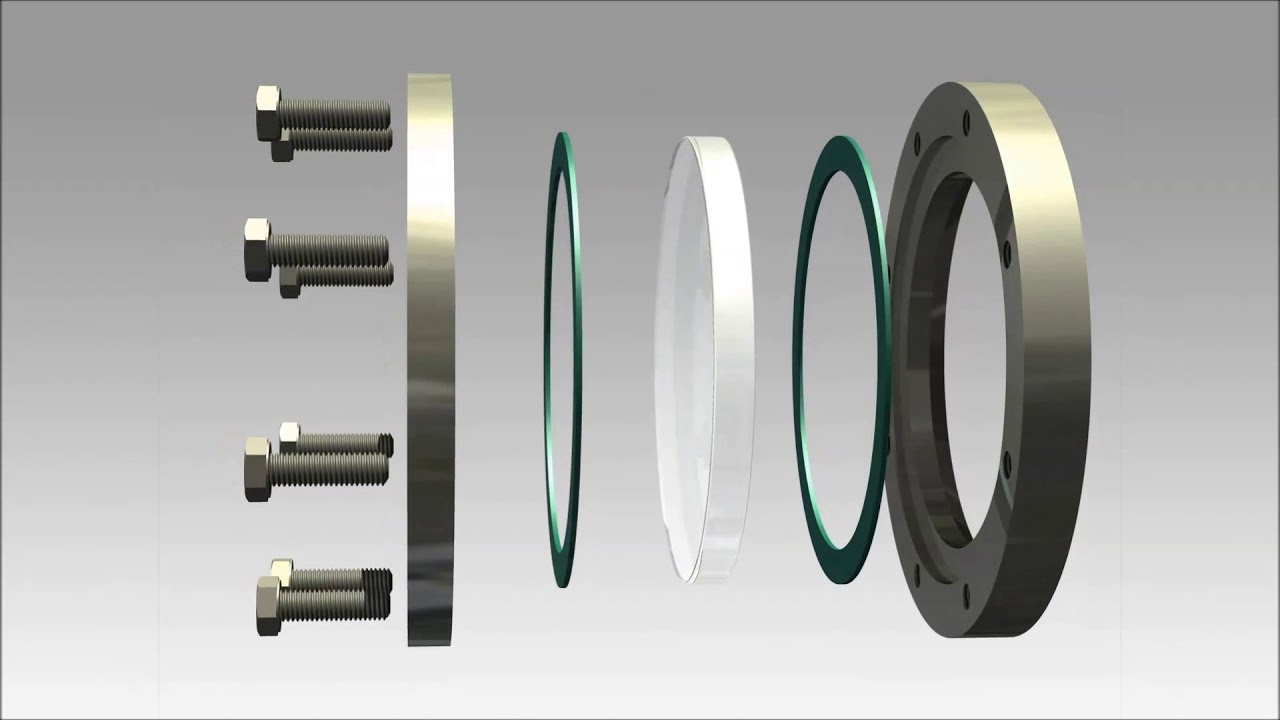
The sight glass fitting consists of two round flange frames for welding in or onto the vessel and enables observation of the vessel interior. On request, it is also available in an illuminated version and/or with a sight glass wiper.
Based on DIN 28120, Type 318 was designed as a cost- and weight-optimised as well as lightweight and flat version for operating pressures up to 2.5 barg. This makes the fitting particularly suitable for applications where an economical solution for low pressure requirements is needed.
The vessel sight glass Type 318 is manufactured as standard with media-contacting parts made from corrosion-resistant stainless steel 1.4571. This provides a material that has proven itself many times over in industrial practice.
Glass material used as standard is borosilicate glass according to DIN 7080. Customer-specific versions of the vessel sight glass with sapphire glass or quartz glass are also possible on request.
For sealing, flat gaskets made from various materials are available. Depending on the medium, temperature and operating conditions, classic fibre gaskets as well as KlingerSil® C4400, PTFE (Teflon®), NBR, novaphit® MST-XP and other branded gaskets can be used.
For applications with elevated temperatures or steam, mica protection discs are available to protect the sight glass. For aggressive chemicals or alkaline solutions, additional FEP coatings or Halar® coatings can be applied.
The sight glass Type 318 can be equipped with suitable accessories on request. These include SGW sight glass wipers, spray devices as well as LED lights for Ex and non-Ex areas.
Typical applications for Type 318 include process engineering plants, storage and process vessels as well as applications in chemical, water and biogas technology. The vessel sight glass enables reliable observation of media and process conditions.
The lightweight and flat design makes Type 318 an economical solution for sight openings at low operating pressures up to max. 2.5 barg.
| DN | 50 | 80 | 100 | 125 | 150 | 200 | 300 | 400 |
|---|---|---|---|---|---|---|---|---|
| Da [mm] | 150 | 175 | 200 | 220 | 250 | 300 | 400 | 500 |
| Di [mm] | 80 | 100 | 125 | 150 | 175 | 225 | 305 | 390 |
| h1 [mm] | 12 | 14 | 14 | 16 | 16 | 16 | 20 | 22 |
| h2 [mm] | 24 | 24 | 24 | 24 | 24 | 24 | 24 | 24 |
| Weight [kg] | 3,6 | 5,0 | 5,9 | 7,1 | 8,8 | 11,3 | 21,7 | 35,0 |
The Type 318 is designed for low operating pressures up to a maximum of 2.5 bar gauge, thereby bridging the gap between the unpressurized Type 317 and the Type 320, which is designed for higher operating pressures.
The Type 318 was designed in accordance with DIN 28120 specifically for operating pressures up to a maximum of 2.5 bar gauge. As a result, the base and cover flanges, as well as the glass, are significantly lighter and flatter than those of the pressure rating designed in accordance with DIN 28120, and are therefore more cost-effective.
Depending on the model, different temperature ranges are available: up to 280 °C with borosilicate glass conforming to DIN 7080, up to 300 °C with an additional mica protective screen, and up to 400 °C with unhardened borosilicate glass.
For the Type 318, the following are available: SGW wipers, SVIII spray devices, LED lights for hazardous and non-hazardous areas, mica protective screens, and FEP or Halar® coatings.
As standard, the media-side base flange of the Type 318 is made of 1.4571 stainless steel. The cover flange is made of 1.4541 stainless steel as standard. Borosilicate glass in accordance with DIN 7080 is used. Flat gaskets made of various materials are available for sealing, selected to suit the medium, temperature, and operating conditions.