Seven selection criteria for process observation in pipelines
What a flow sight glass reveals
Bubbles, turbidity or visible particles can provide indications of process conditions. A flow sight glass enables direct observation of the medium and, depending on its properties, can also make flow patterns visible. To ensure effective observation during operation, the design and installation location must suit the task.
ACI Industriearmaturen GmbH specialises in the manufacture and development of sight glass fittings and customised solutions for visual process monitoring. In this article, you will learn what matters when selecting a flow sight glass in terms of medium, pressure, temperature and installation conditions.
The nominal size is right, and so is the pressure rating. Yet a flow sight glass can still fail to serve its purpose during operation. For example, deposits may obscure the viewing area, the medium may show no discernible movement, or the installation location may be difficult to access for observation. Selection should therefore always begin with a specific question:
What should be visible at this point in the pipeline?
Depending on the application, this may include bubbles in a liquid, discolouration, turbidity, visible particles or flow made visible by an indicator rotor. With transparent, homogeneous media, however, movement is not necessarily visible. This applies particularly to clear gases.
A flow sight glass complements existing measuring equipment and allows direct observation of the medium while the process is running. Even when measuring equipment is missing or faulty.
Seven criteria are crucial for selection:
- Medium and compatibility
The body, glass and seals must be suitable for the medium, pressure and temperature. Concentration, solids content, viscosity and physical state should also be considered when selecting the combination of materials.
- Pressure and connection
The pressure rating (nominal pressure PN) alone is not sufficient. What matters is the permissible operating pressure (PS) at the minimum/maximum permissible operating temperature (TS). Pressure surges and vacuum must also be considered. The nominal size, flange standard (DIN, ASME) and face-to-face length must match the pipeline.
- Temperature and glass
In addition to the operating temperature, temperature changes and pressure loads must be considered. DIN 7080 covers thermally toughened round borosilicate glass plates for pressure applications at temperatures up to 400 °C and cryogenic temperatures down to -196 °C. For higher operating temperatures, a suitable design must be selected based on the specific pressure and temperature conditions.
- Seals
Seal materials must be selected independently of the body material. Their resistance must be suitable for the process, cleaning and changing operating conditions.
- Installation and accessibility
The sight glass should be installed so that the medium is clearly visible. Adequate lighting and sufficient space for cleaning and maintenance make everyday use easier. If the surroundings are poorly lit or the medium is difficult to observe, an additional lighting unit can be fitted.
- Accessories
Lights improve visibility with turbid media. Where fouling occurs, wipers, spray devices or a combination of both help ensure continued process observation. For higher thermal loads (particularly in steam and condensate applications), the sight glass can also be fitted with a mica protection disc. For applications involving aggressive chemicals or alkalis, the sight glass can optionally be provided with a special coating.
- Documentation
Material certificates and additional inspections are part of our standard offering. Documentation requirements may vary depending on the company standard, installation location and country. We take these into account during design and production and can provide a wide range of commonly required certificates and reports as standard. The specific documents required should always be clarified before ordering to ensure that all documentation is available for acceptance and commissioning.
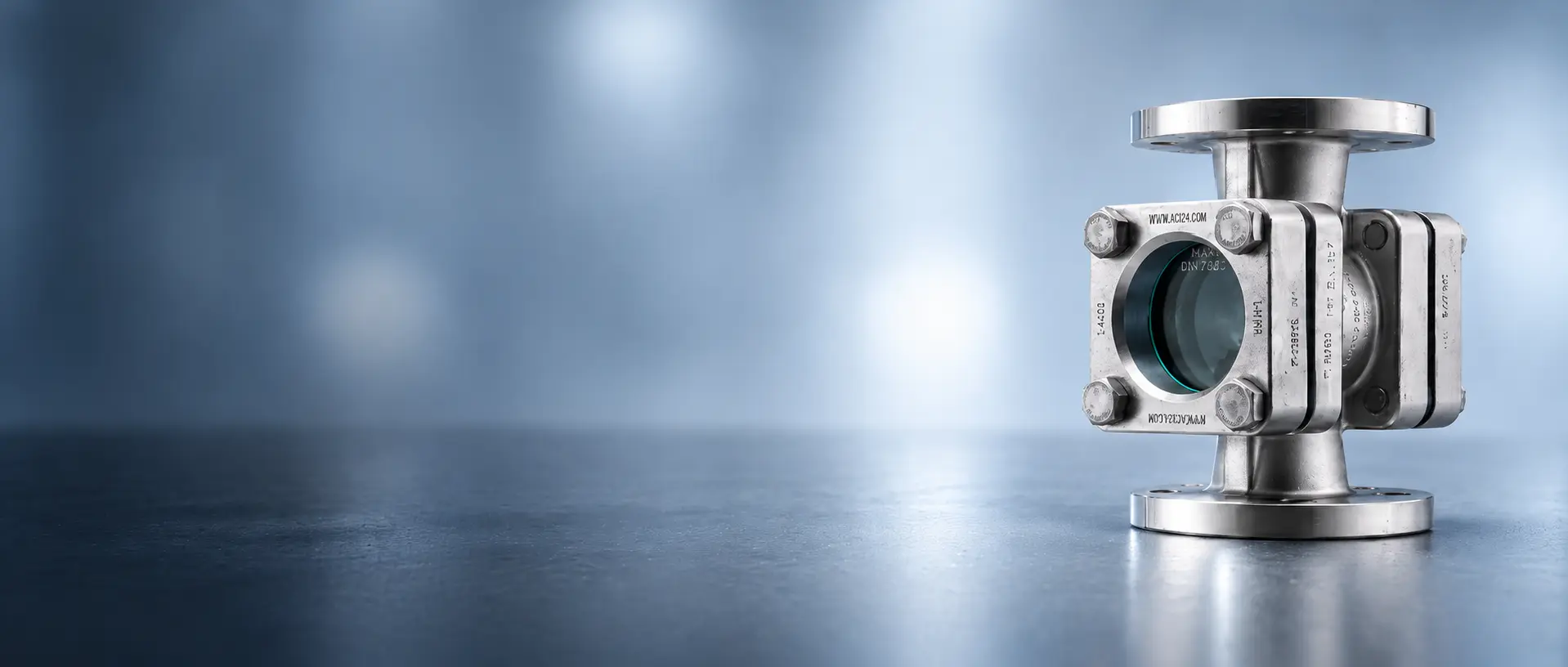
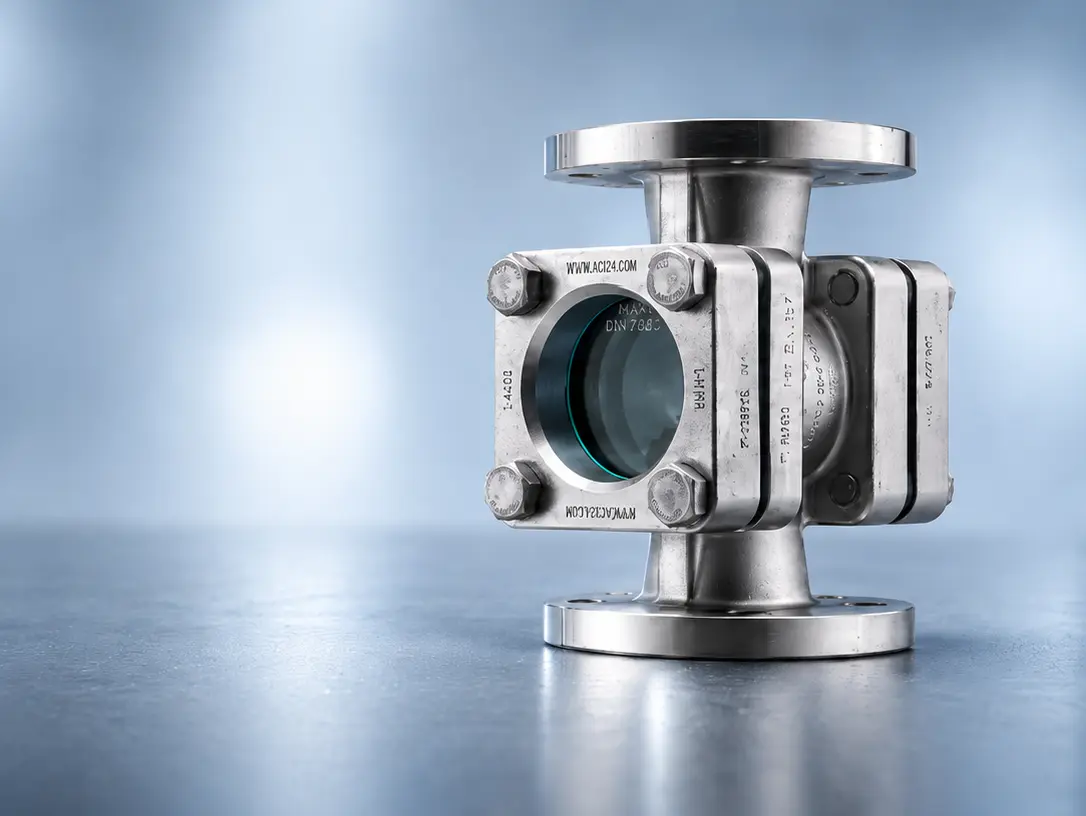
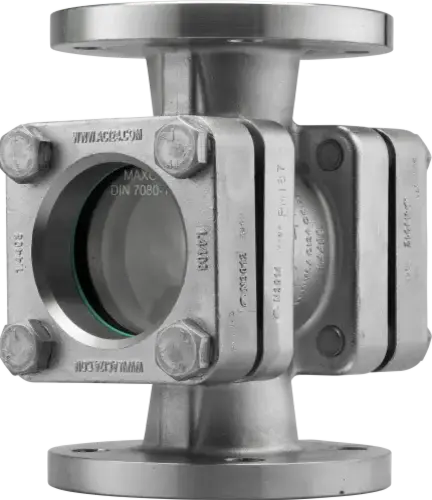
The Type 550 flow sight glass from ACI Industriearmaturen features flange connections according to DIN EN 1092-1 and is manufactured based on DIN 11869. The design and calculations have been preliminarily reviewed by TÜV SÜD Industrie Service GmbH.
Complete data for the right configuration
Clarifying the observation task, medium, pressure, temperature, connection and documentation requirements early makes selection easier and helps avoid subsequent modifications and potential additional costs.
The ACI Sight Glass Configurator provides a starting point for product selection. The complete operating data then forms the basis for technical consultation and an application-specific quotation.