Download datasheet Datasheet
Product video Product video
For welding in or on according to DIN 28120
Execution according to DIN 28120 for operating pressures up to 16 barg
Non binding • Usually a response within 24 hours


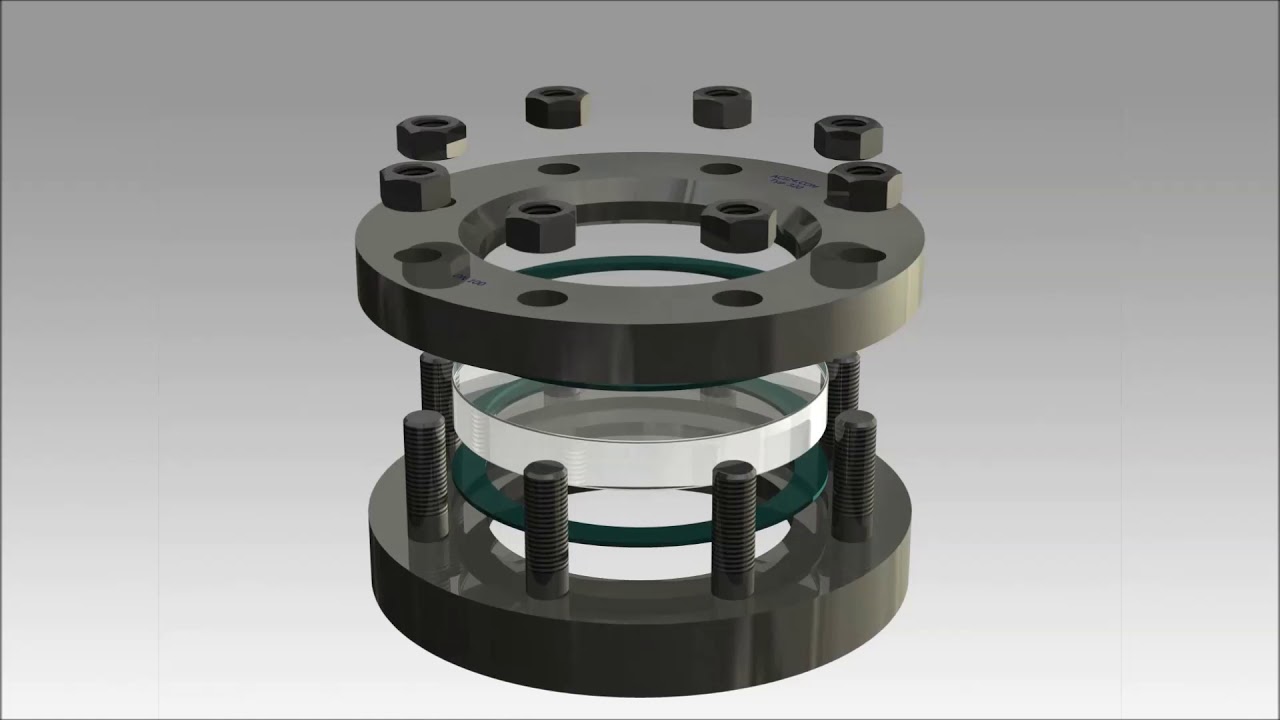
Our round sight glasses type 320 are welded on or in a container wall to allow for observation or illumination of the inside of the container. A sight glass made of chemically highly resistant borosilicate glass DIN7080 is clamped between two high-quality stainless steel flanges and proven quality seals.
Beyond the definitions of DIN 28120, we also offer type 320 in special sizes of DN 250 and DN 300. These sizes, not specified in the standard, have also been constructed in accordance with DIN 28120.
Our sight glasses type 320 are made from high-quality stainless steel 1.4571 (316Ti), which our customers have appreciated for years. The glass material used is the tried-and-tested borosilicate glass according to DIN 7080 (or according to customer specifications).
The sealing of the fitting is done with flat seals tailored to your needs from a comprehensive range of materials. In addition to the common fiber seals, this also offers more demanding materials such as PTFE (Teflon®), NBR, novaphit® MST-XP, KlingerSil® C4400, and many other brand seals.
If the maximum operating temperature of borosilicate glass DIN 7080 does not meet your requirements, or if the process conditions pose a problem even for the highly resistant borosilicate glass, a mica protection disk specially adapted for the fitting offers additional protection against temperature and steam. FEP or Halar® coatings additionally protect the borosilicate glass from aggressive chemicals or alkalis.
Like other sight glass fittings, type 320 can be equipped upon request with sight glass wiper type SGW and SWII, spray devices SVI, or lights.
| DN | 25 | 40 | 50 | 80 | 100 | 125 | 150 | 200 | 250² | 300² |
|---|---|---|---|---|---|---|---|---|---|---|
| Da [mm] | 115 | 150 | 165 | 200 | 220 | 250 | 285 | 340 | 395 | 445 |
| Di [mm] | 48 | 65 | 80 | 100 | 125 | 150 | 175 | 225 | 280 | 325 |
| h1 [mm] | 16 | 16 | 16 | 20 | 22 | 25 | 30 | 35 | 40 | 45 |
| h2 [mm] | 25 | 30 | 30 | 30 | 30 | 30 | 36 | 36 | 40 | 45 |
| Glass-Ø [mm] | 63 | 80 | 100 | 125 | 150 | 175 | 200 | 250 | 300 | 355 |
| s (PN10) [mm] | 10 | 10 | 12 | 15 | 20 | 20 | 25 | 30 | 45 | 45 |
| s (PN16) [mm] | 10 | 12 | 15 | 20 | 25 | 25 | 30 | - | - | - |
| Weight (PN 10) [kg] | - | 5,4 | 5,9 | 9,6 | 11,1 | 14,3 | 21,9 | 30,7 | 44,7 | 59,2 |
| Weight (PN 16) [kg] | 2,8 | 5,4 | 6,0 | 9,7 | 11,3 | 14,6 | 22,4 | - | - | - |
2) Similar to DIN 28120
Der Grundflansch ist spannungsfrei in die Behälterwand einzuschweißen. Nach dem Schweißen muss die Dichtfläche zwingend auf Ebenheit kontrolliert werden, da hitzebedingter Verzug eine häufige Ursache für späteren Glasbruch ist. Glas und Dichtungen sind vor dem Schweißvorgang zu entfernen.
Ja, nach DIN 28120 ist der Einsatz unter Festigkeitsgesichtspunkten bis -1 bar möglich. Die tatsächliche Eignung für Vakuumanwendungen ist jedoch auch von weiteren Einflussgrößen abhängig, insbesondere vom Dichtungswerkstoff, den Schraubenanzugsmomenten und den konkreten Umgebungsbedingungen.
Die DIN 28120 deckt standardmäßig die Druckstufen PN 10 und PN 16 ab. Darüber hinaus können wir als Hersteller verstärkte Sonderflansche für nahezu jeden Betriebsdruck auslegen und fertigen. Gerne beraten wir Sie zu individuellen Ausführungen für höhere Druckstufen.
Eine regelmäßige Sichtprüfung des Schauglases ist erforderlich. Bei mechanischen Beschädigungen wie Kratzern, Ausbrüchen oder Abplatzungen sowie bei Trübungen infolge von Glasabtrag ist ein sofortiger Austausch notwendig. Es wird empfohlen, im Zuge jedes Glaswechsels auch die Dichtungen zu ersetzen.
Ja, für den Typ 320 sind Ersatzgläser und Dichtungen auch einzeln erhältlich. Aufgrund der Normung der Armatur sind diese Ersatzteile in der Regel kurzfristig, vielfach auch direkt ab Lager, verfügbar. Zum Lieferprogramm gehören Borosilikatgläser MAXOS® nach DIN 7080 sowie passende Dichtungssätze aus PTFE (Teflon®), NBR, novaphit® MST-XP und KlingerSil® C4400